trades a break above the session high after the first stretch, with a turnover filter so it doesn't fire on dead names.
1. The rule
# BUY
if HhmmSs >= 94500 and HhmmSs <= 103000:
    if Price > HighestPrice(900) and DayAmount > 5000000 and Strength > 110:
        Buy()
# SELL
if ProfitPct >= 3.0 or ProfitPct <= -1.5 or HoldTime >= 1800:
Sell()the time window is doing more work than the breakout condition. widen it and the character of the strategy changes completely, so test that before anything else.
2. Why this is not the same as a plain breakout
Two conditions separate this from buying any new high. The window keeps it inside the part of
the session where an opening range means something. The turnover and strength requirements mean
the high was cleared by participation rather than by one order in a thin book.
HighestPrice(900) is fifteen minutes, so early in the window the reference is the opening
range itself.
3. When it fails
It fails on the second and third breakout of the same morning. The first clearing of the range
has information in it; by the third, the range has stopped being a range and the strategy is
buying noise at progressively worse prices.
4. What to change first
Add a once-per-symbol-per-day constraint before tuning thresholds. Most of the damage in
breakout strategies comes from re-entering the same failing setup, not from the entry being
wrong the first time.
5. What the round trip asks of it
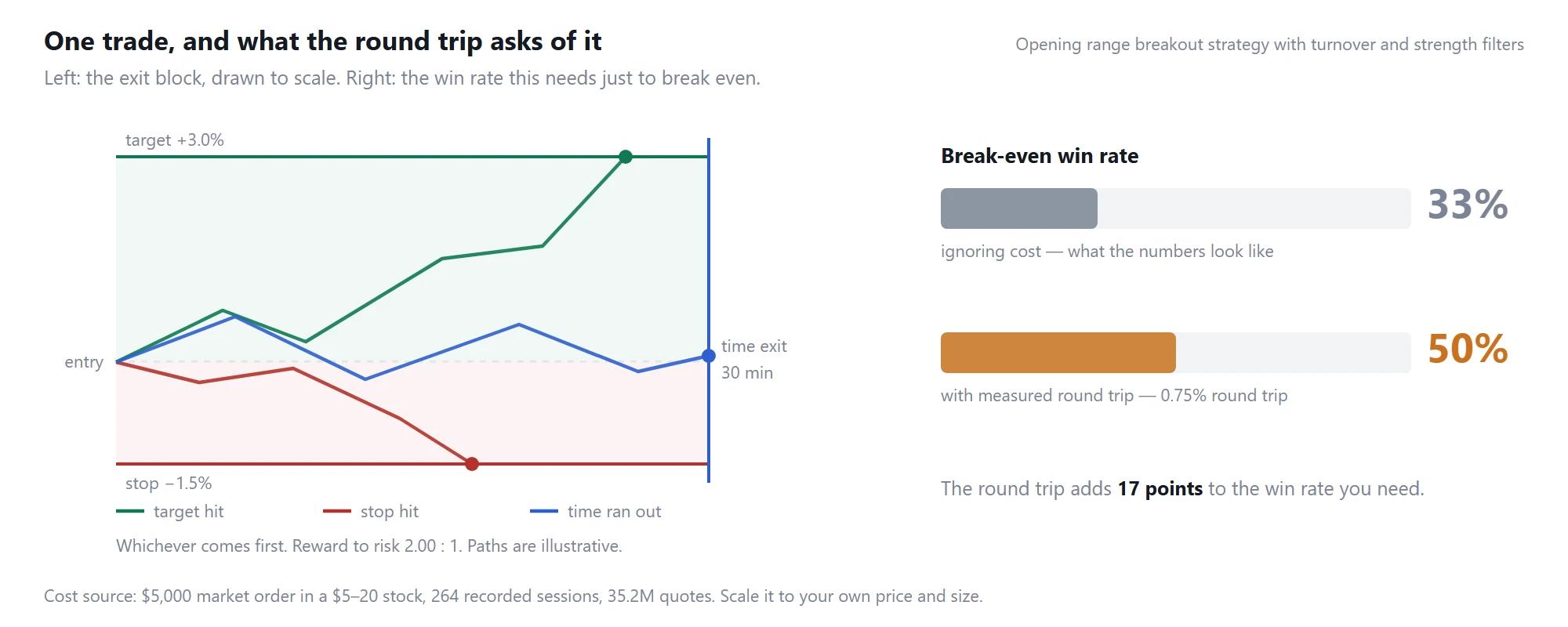
Opening range breakout strategy with turnover and strength filters: the exit block drawn to scale, and the break-even win rate before and after measured trading costs
Filters cost you trades, and trades cost you round trips — which is why adding filters
often helps more than it should.
The 3.0% target against a 1.5% stop needs 33% on paper and 50% with the measured 0.75% round
trip. A wider target absorbs the toll far better than a tight one: the same cost that adds
twenty-five points to a 2% target adds only seventeen here.
That is worth remembering when you are tempted to take profit earlier. Tightening the target does
not just reduce the win, it raises the bar you have to clear
(what day trading a US stock really costs).
Educational template for research and backtesting. Not investment advice and not a signal service.
Originally published by TraderWe on July 23, 2026. You may quote and link to this page. Republishing the full text without a link back to the original is not permitted.